Author: Master Gardener Grace Russo
Every year around this time, we start seeing posts on social media encouraging us to leave the leaves and not to tidy the garden. I love this trend of encouraging ecological thinking in the garden, but sometimes it’s hard to apply to reality! As often happens in late summer, my garden got away from me. Hot days, humidity, the busy season of back to school… The weeds started to run wild in the ornamental beds as I walked past them to pick the late season tomatoes. I needed to put my garden to bed, but I want to support wildlife habitat too. So, what did I do?
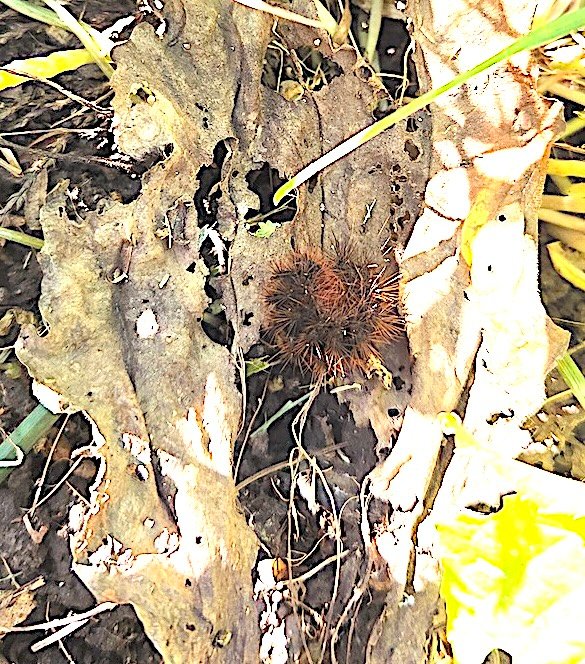
Featured image: This fuzzy brown caterpillar is curled up in a defensive posture, because I scared it when I cleared off the Creeping Charlie
Weeding, planting, and gentle support.
Weeding
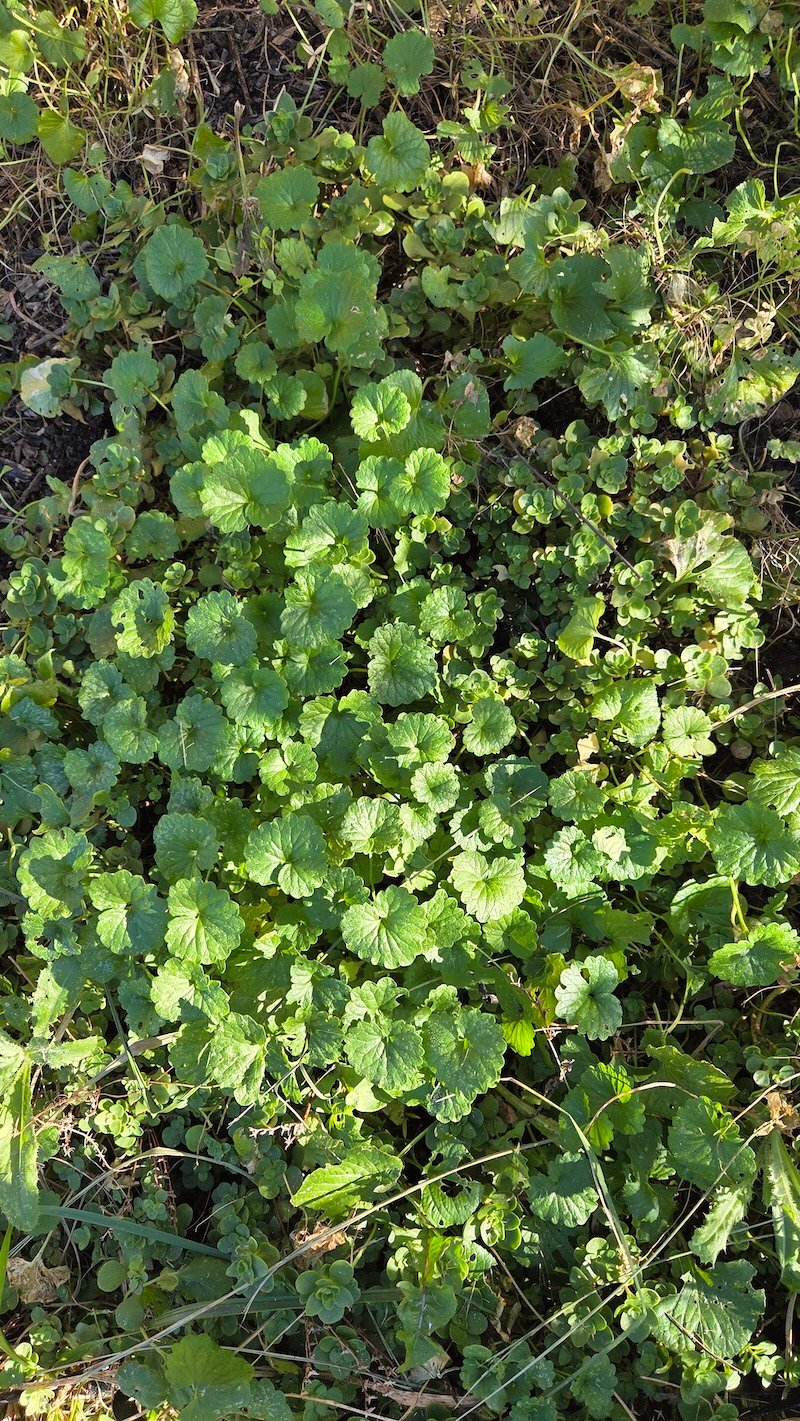
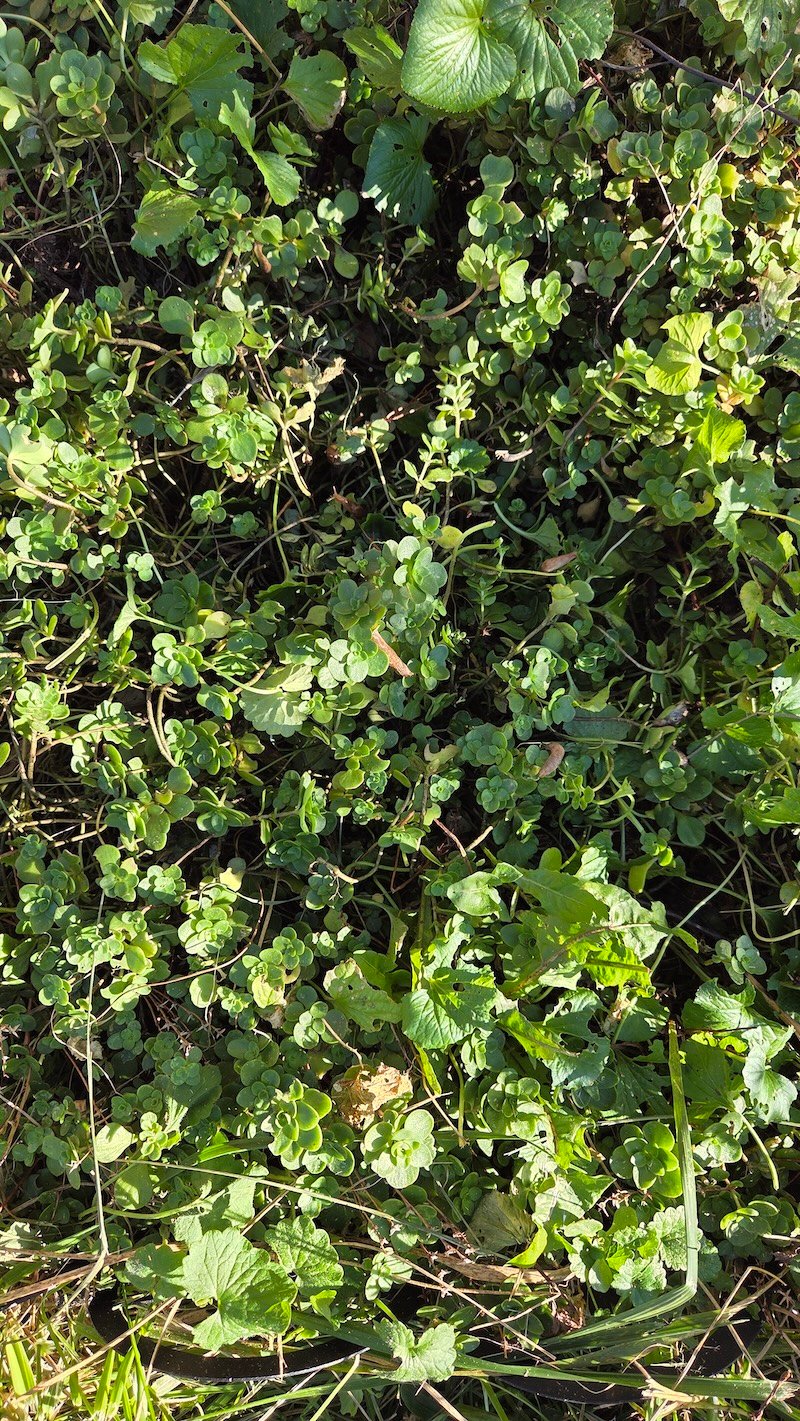
My yard is plagued by Creeping Charlie. Also known as Ground Ivy, or Glechoma hederacea, this is a tenacious weed. It smells herbal when you pull it, it’s an evergreen, mint family plant that roots along the vine as it creeps into all your plants. I don’t mind it in the yard, where it puts up little purple flowers in the spring and summer. Way, way back in Merry Old England, the Saxons used it to brew ale. Charming history notwithstanding, I followed the scalloped leaves down to the vine and pulled out long strings of the vine to reveal my Stonecrop once again. I also pulled it back away from the base of my yarrow plants, where it was running wild! But much bothers yarrow, but I do think it looks tidier.
Before and after weeding my sedum
Planting
Fall is a great time to add new plants to the garden. They may not look like much as the leaves start to fade, but energy is being stored in the root systems every day, and they’ll come back in the spring ready to leaf out with renewed vigor. I took the opportunity to add coneflowers, moss phlox, coreopsis, and anise hyssop around in places where I needed more color.
Gentle support
I don’t like to deadhead much in my garden. In fact, one of the main reasons I have so many coneflowers is specifically for the dead flower stalks! Goldfinches are some of my favorite birds, and they are seed-eaters. They’ll come and perch on those seed heads all fall and winter, pecking out seeds. I love their bright yellow bodies against the browns and greys of winter. My coneflowers stay up well, but I have a few other seed heads that tend to flop. My Switchgrass is about 6-7 feet tall and a lovely shelter for winged friends, but the outer stalks were beginning to bend outwards. A bit of twine, not pulled tight, brought the grass back into its natural vase shape while still leaving plenty space internally for birds to rest. Tidying the garden doesn’t have to mean cutting things back!
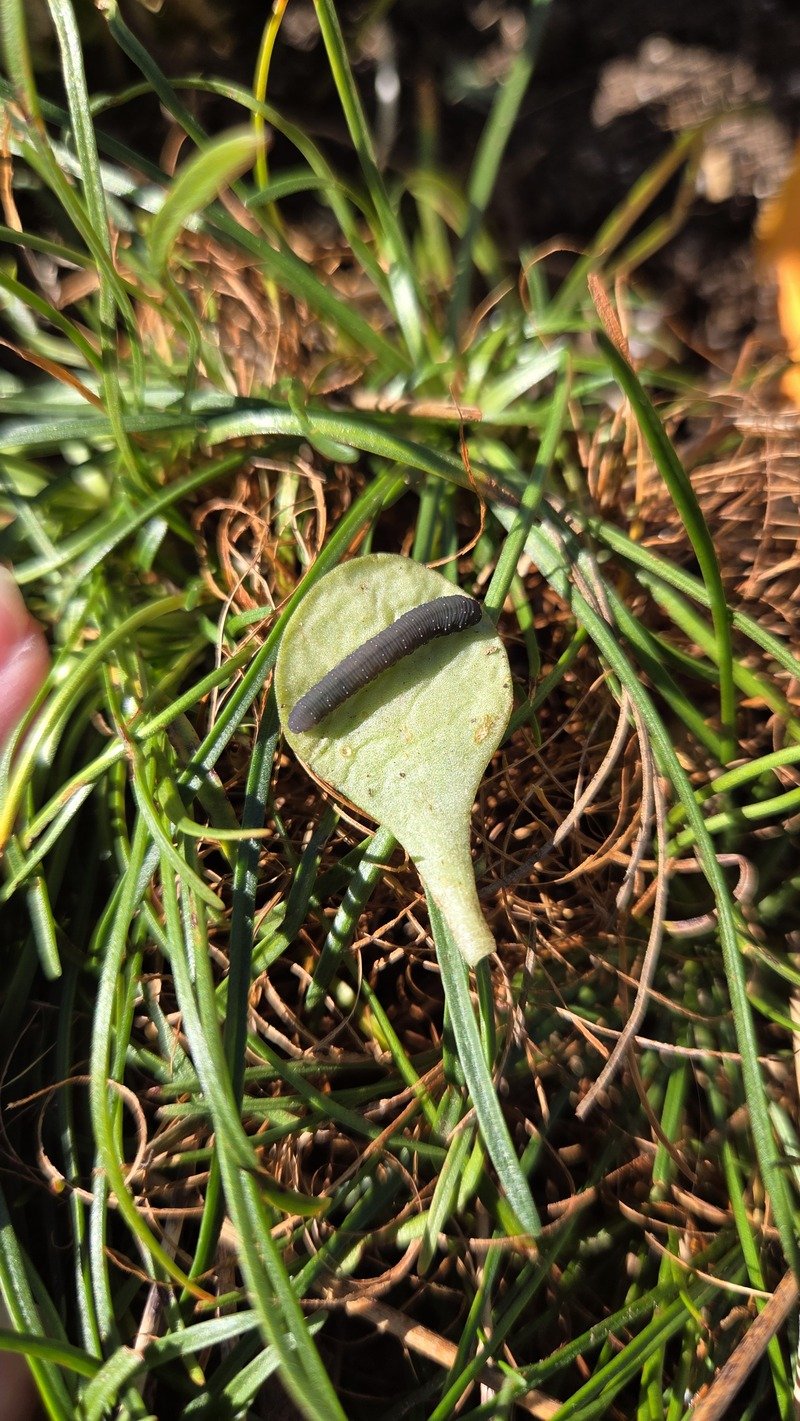
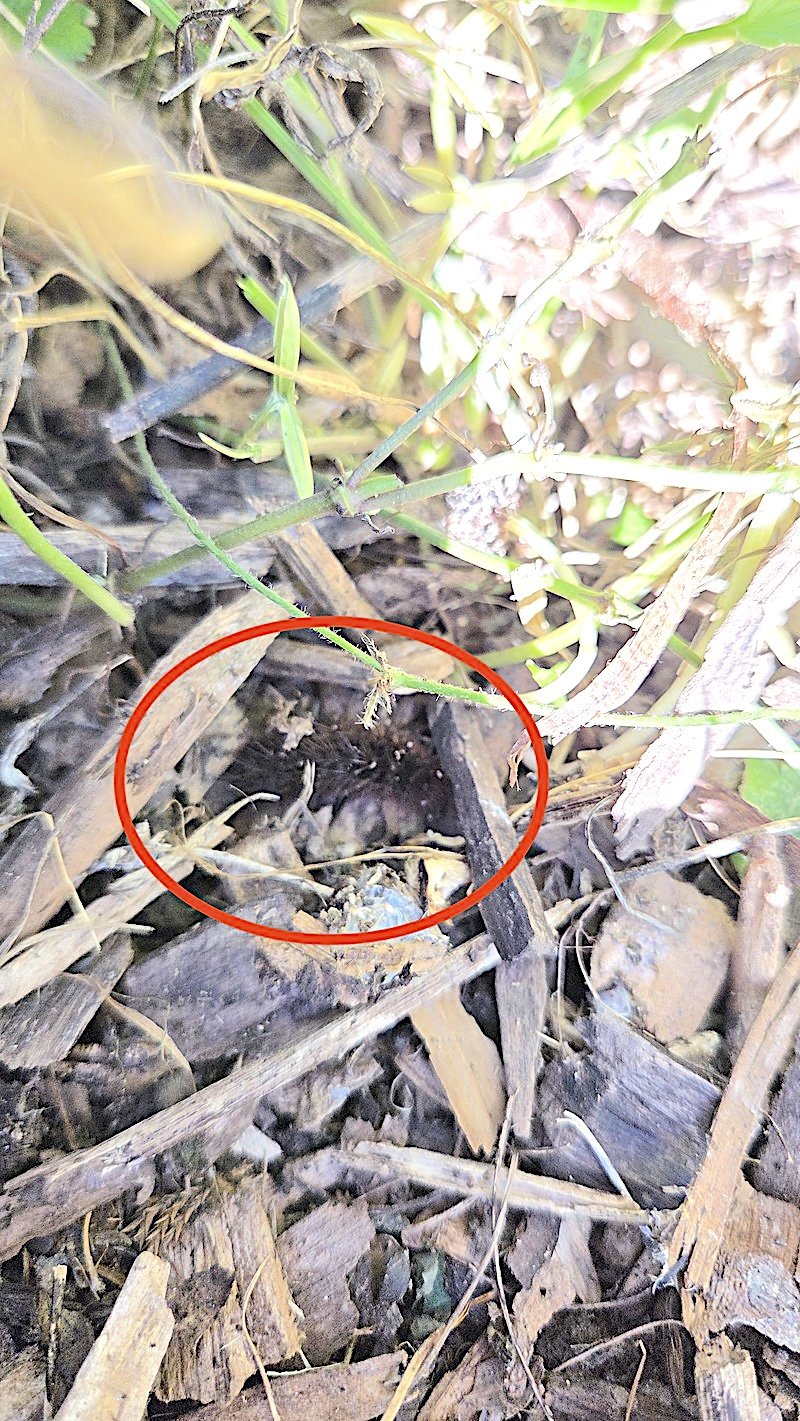
During all this garden clean up, I found 5 different types of caterpillar (and 2 caterpillars of the same type), as well as plenty of faster insects like spiders, moths, and beetles. I was taking out a good bit of biomass by removing creeping charlie, but very few places had bare earth. Sedum, phlox, and violets give plenty of shelter for any small creatures I disturbed. Moreover, since I focused on adding native plants to my garden bed, I am leaving plants that are more likely to be natural food for the bugs that live here. Many caterpillars and insects are specialists–feeding on or laying eggs on only one type of plant. These native bugs have co-evolved with our native plants over millennia! So I did tidy up my garden beds for winter, but I did so with my smallest neighbors in mind.